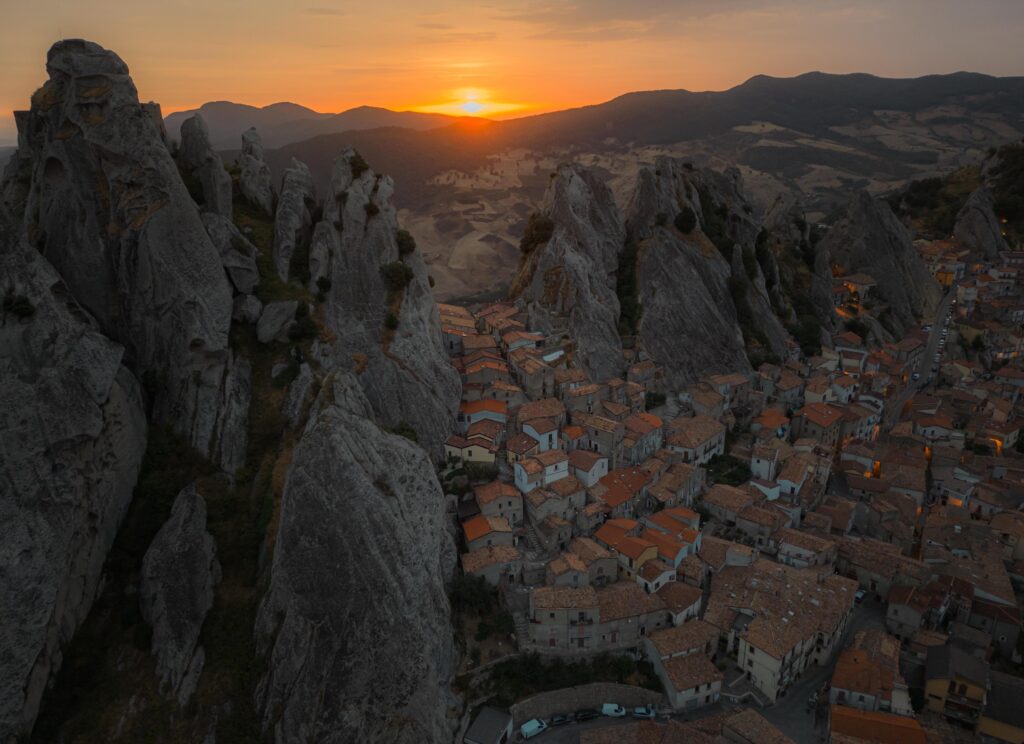
I climbed up and down again, alone, through the familiar little streets until I reached the church, in the wind, at the top of the village, to take another look at the whole horizon, which stretches immensely beyond the borders of Lucania. Below me, the houses of the village, with their yellowish roofs, and then the undulating, grayish descent of the mountain down to the Basento, and, in front, the mountains of Accettura, from those further down that hide Ferrandina, to the Dolomites of Pietrapertosa, behind which the riverbed fades away.
Carlo Levi, Christ Stopped at Eboli
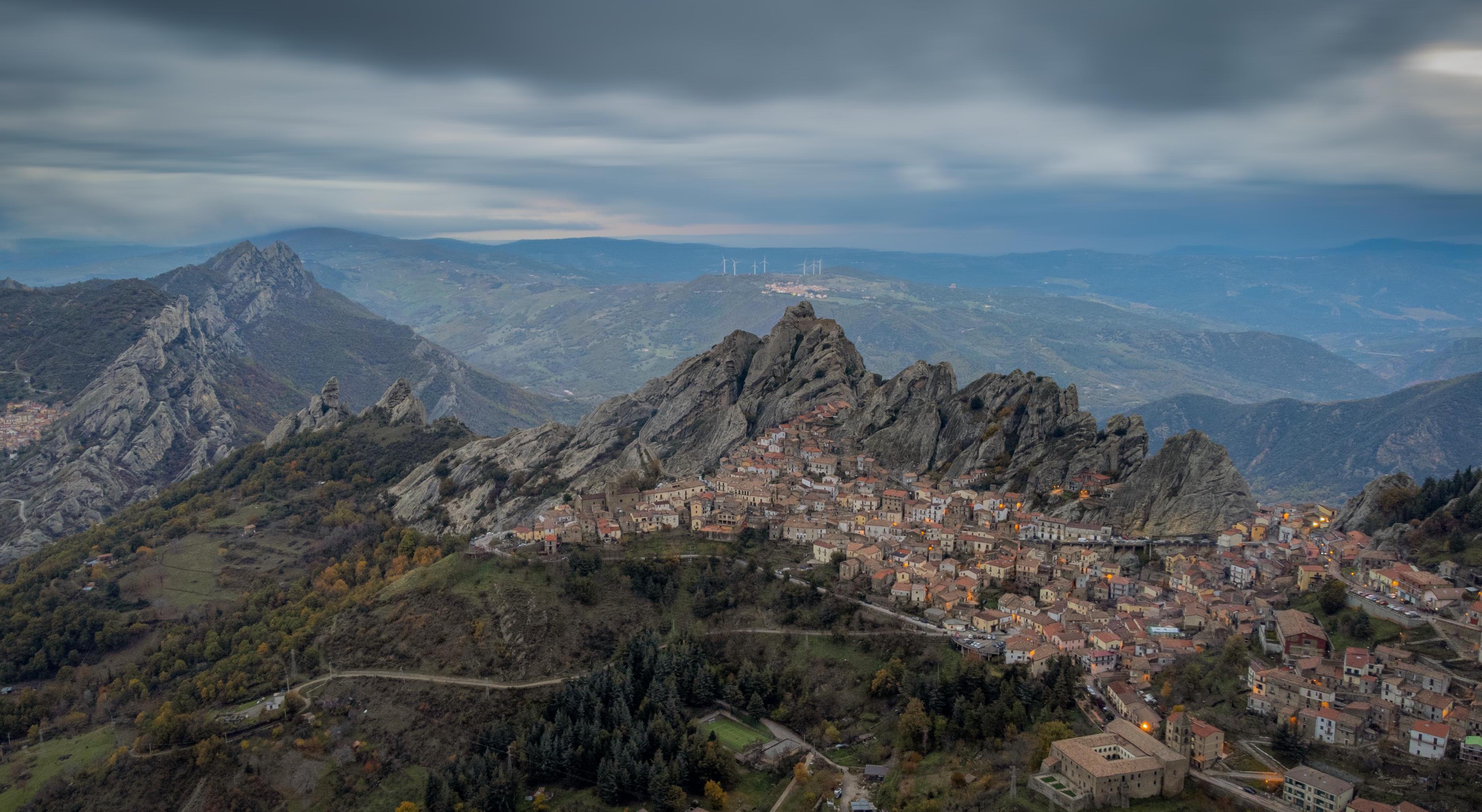
Instructions: open Google Maps. Type Basilicata. Locate Potenza. Zoom in, zoom in, zoom in – Pietrapertosa.
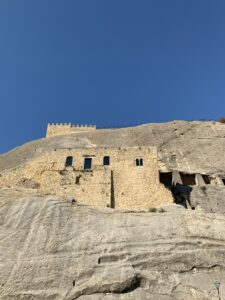
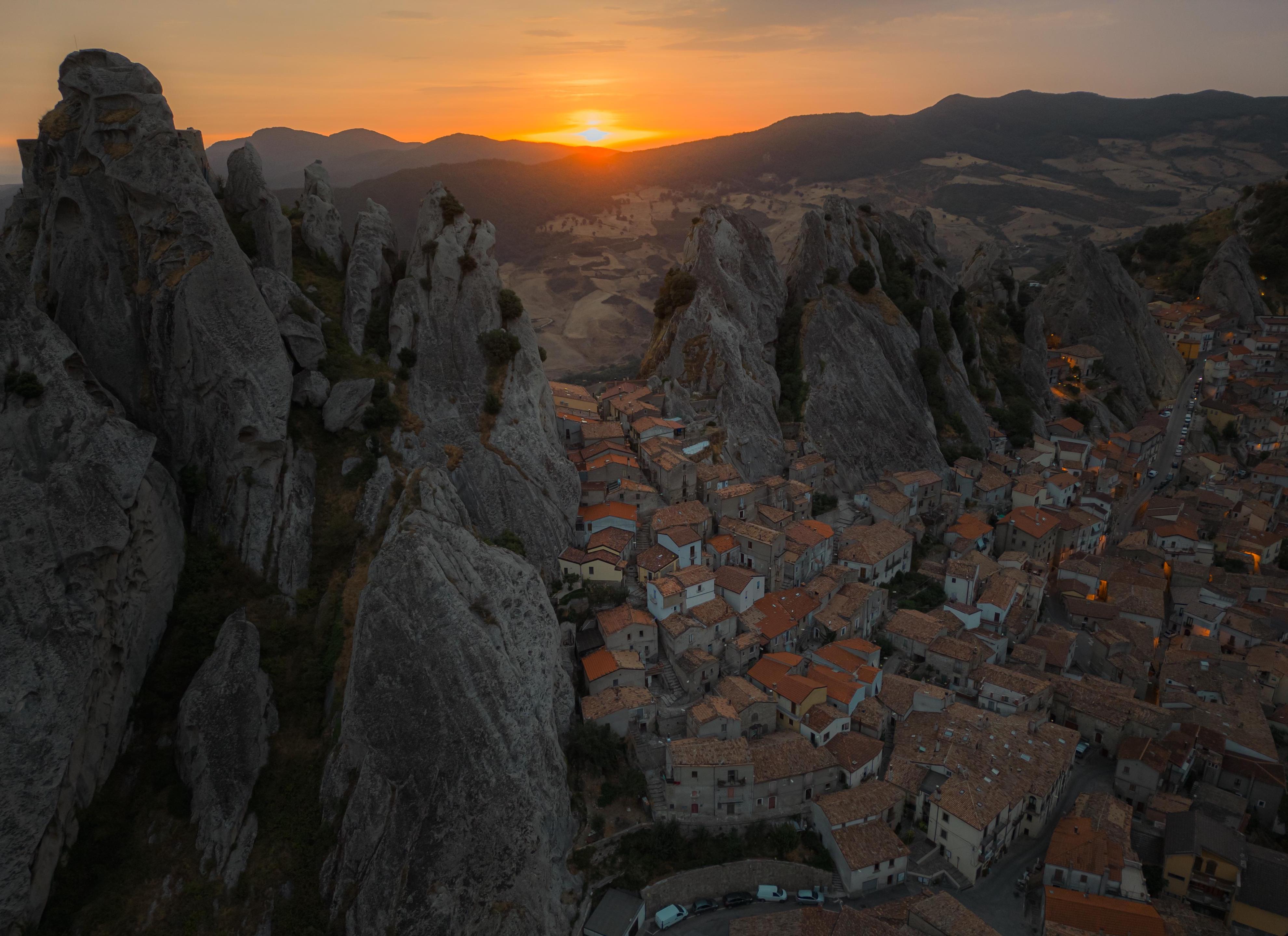
Nestled in the Lucanian Dolomites, Pietrapertosa is a small village with just 924 inhabitants in Potenza’s district. Since its founding, it has been a crossroads of cultures and peoples, leaving visible traces such as the Arabata district, the oldest part of the village, named after the Arabs who founded the village. Palestinian artist Emily Jacir was excavating these roots when by chance a local woman kindly invited her into her home and explained that the importance of hospitality among the people of Pietrapertosa stems from their Arab origins.
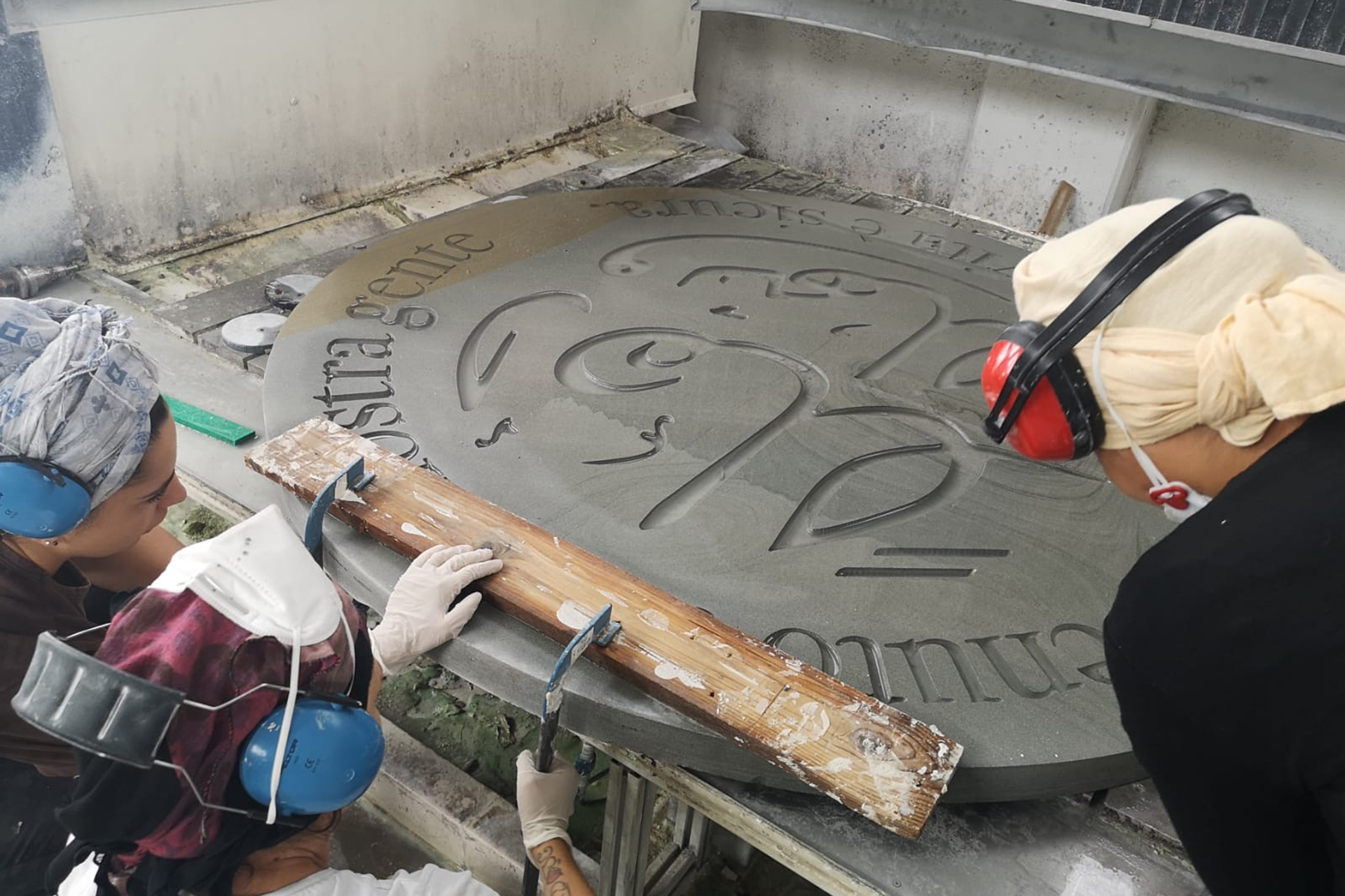
Indeed, to celebrate this shared space and common heritage, the artist created a work that transcends national borders, linking Basilicata to Palestine. The final result is a circular sculpture, measuring 179 cm in diameter and 6 cm in thickness, crafted from Gorgoglione stone by a team of female marble workers. On the medallion, an inscription in both Italian and Arabic delivers a welcoming message: “Sei venuto tra la nostra gente e la tua vita è sicura” [You have come amongst our people and your life is safe].
Once completed, the work made its way to Turin, where it was exhibited during the group show “Push the Limits” at the Fondazione Merz – curated by Claudia Gioia and Beatrice Merz. The sculpture, through the support of the Merz Foundation and the Municipality of Pietrapertosa, was then permanently installed in Pietrapertosa.