PANORAMA POZZUOLI
10–14 September 2025
A city-wide exhibition curated by Chiara Parisi
For the fifth edition of the city-wide exhibition, which has been connecting art, architecture, antiquity and the contemporary with different territories and communities every year since 2021, ITALICS arrived in Pozzuoli
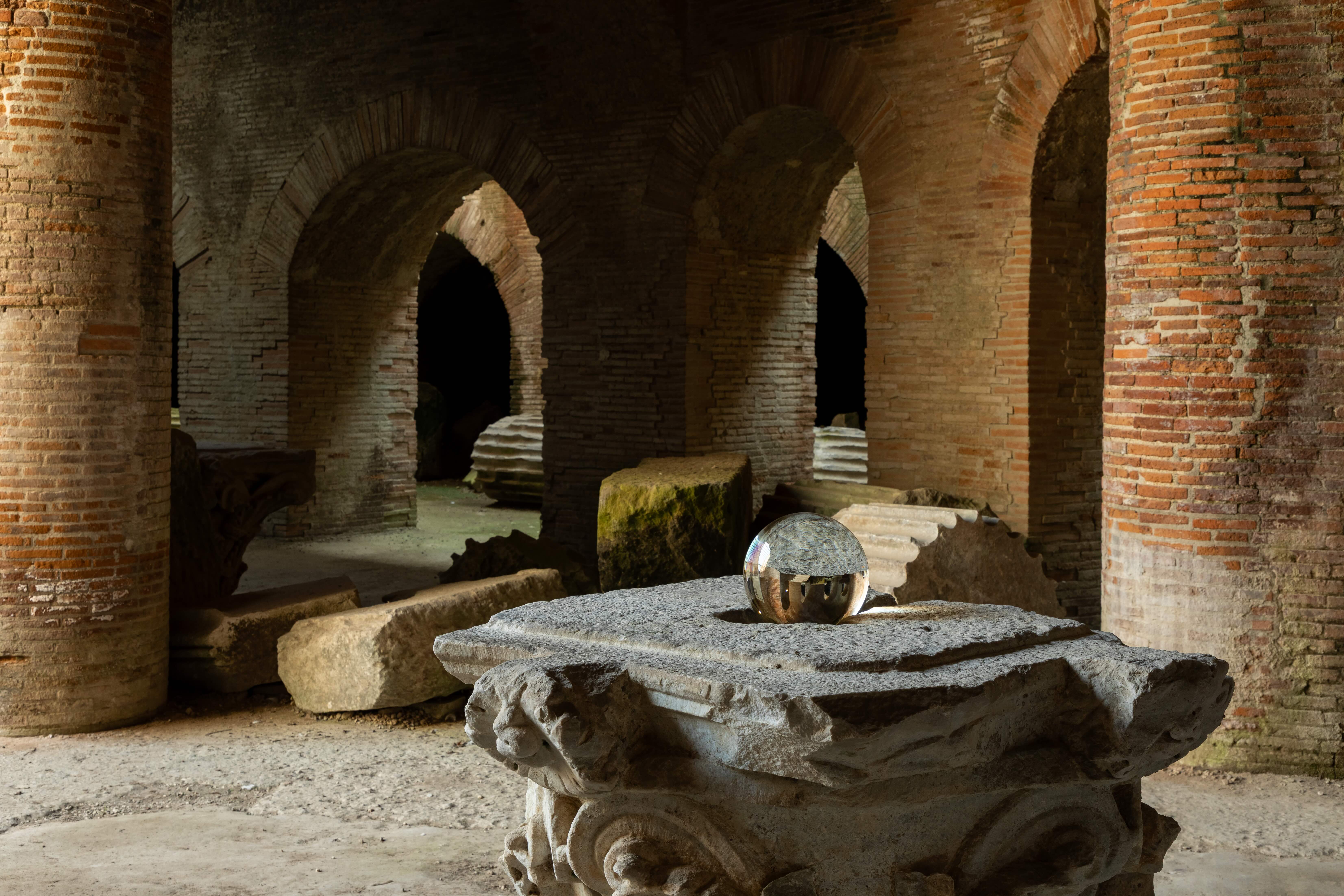
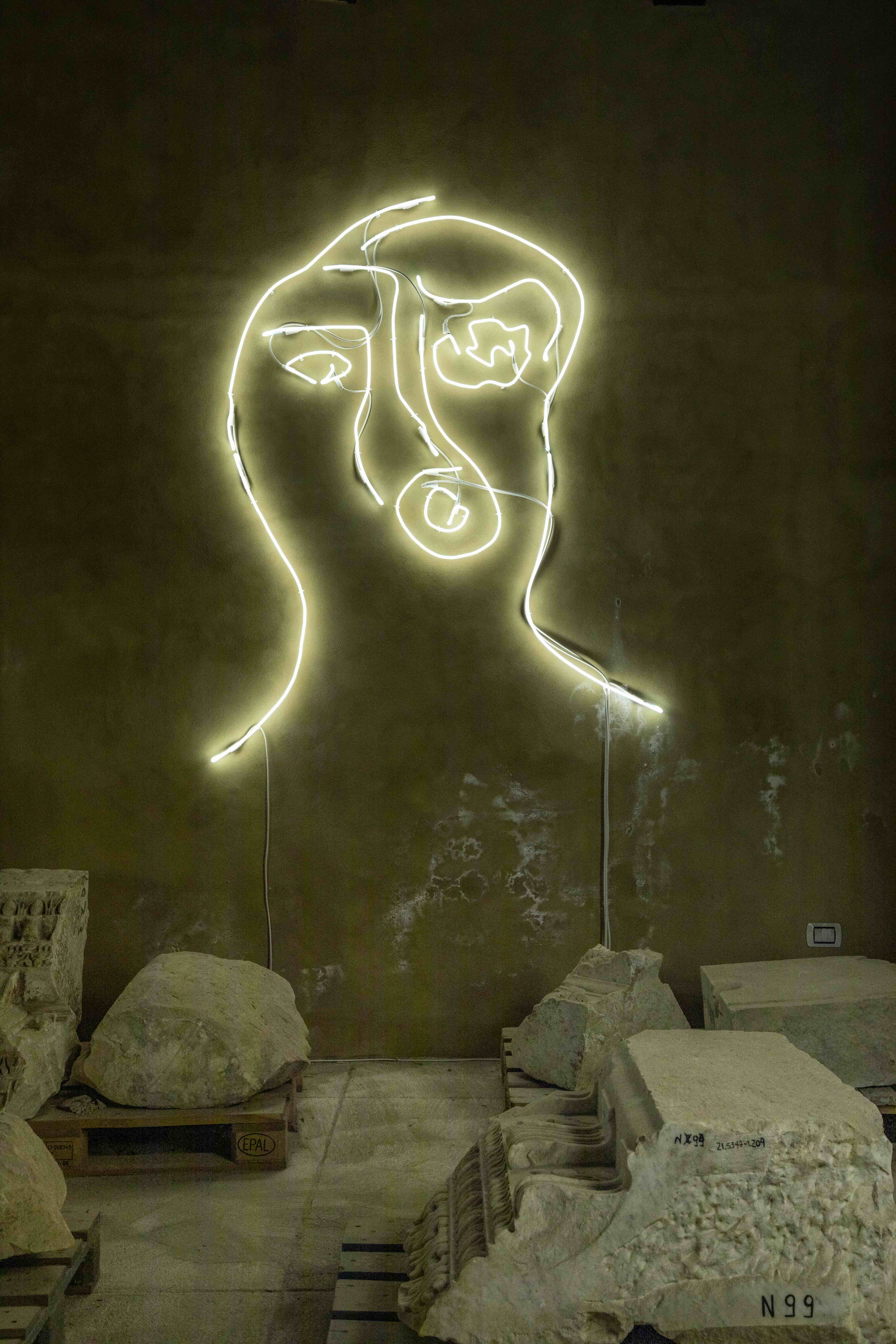
From 10 to 14 September 2025, Panorama Pozzuoli – the city-wide exhibition conceived by ITALICS – guided the public through an immersive itinerary intertwining divinities and creation, memory and the urgencies of the present, within a territory where myth, history, and nature have overlapped for millennia. Curated by Chiara Parisi, director of the Centre Pompidou-Metz, and supported by the Campania Region and Scabec Panorama once again succeeded in weaving a collective narrative that connected symbolic landmarks and previously unseen spaces in the city and the Campi Flegrei (Phlegraean Fields).
Over its five days of opening, Panorama Pozzuoli recorded an extraordinary attendance, with over 14.000 visitors including art enthusiasts, industry experts, Italian and international press, curious onlookers, and an international audience, confirming the strong interest in and the attractiveness of the project.
“Vitality, sophistication, creativity. Panorama Pozzuoli comes to a close as an extraordinary collective experience – further emphasizes curator Chiara Parisi – capable of engaging with a vast and powerful territory alongside both emerging and established artists, artworks, local, national, and international press, the art world with its enthusiasts, renowned figures, the inhabitants of Pozzuoli and the entire Neapolitan area, all brought together simultaneously. The energy of Pozzuoli, this wonderful bay where the Mediterranean reveals its most fascinating colours, and of the Campi Flegrei, acted as a sounding board, amplifying every encounter and every word. The city opened itself to all of us with great generosity. More than a conclusion, this marks the beginning of a new horizon: the desire to continue cultivating relationships, imagining, and building future projects together. Thank you, Pozzuoli, for allowing us to discover or rediscover our shared Mediterranean history and the memories you preserve.”
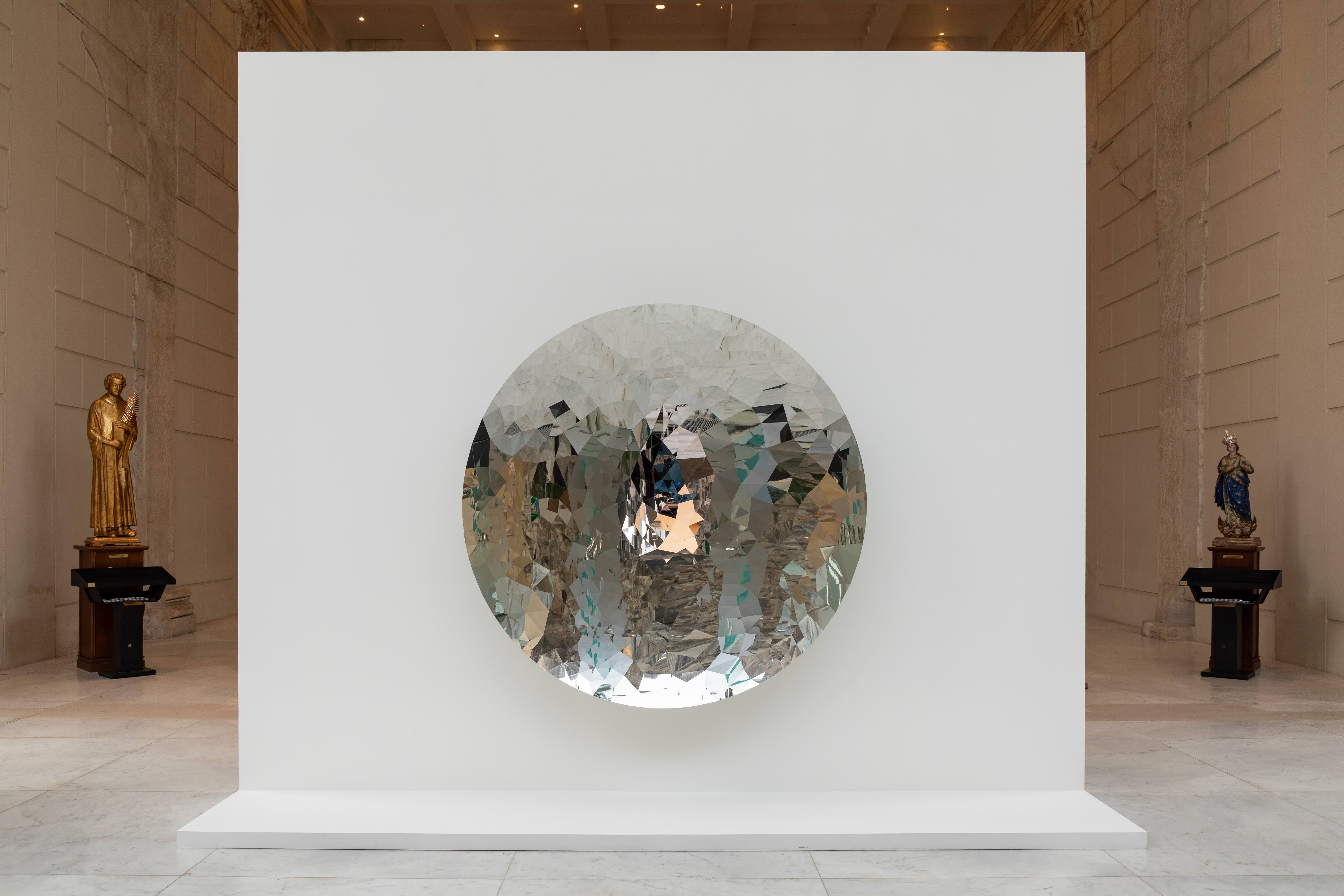
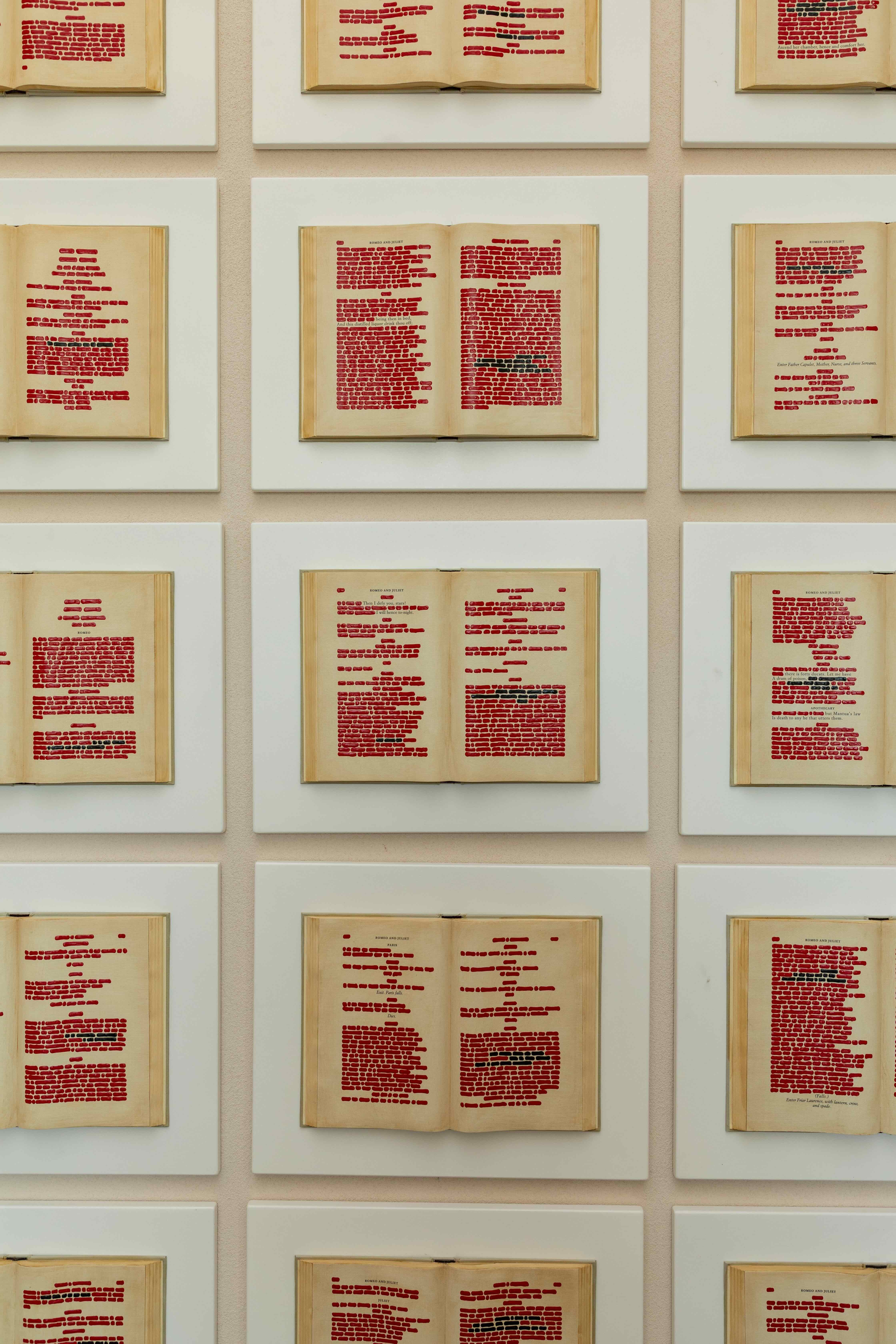
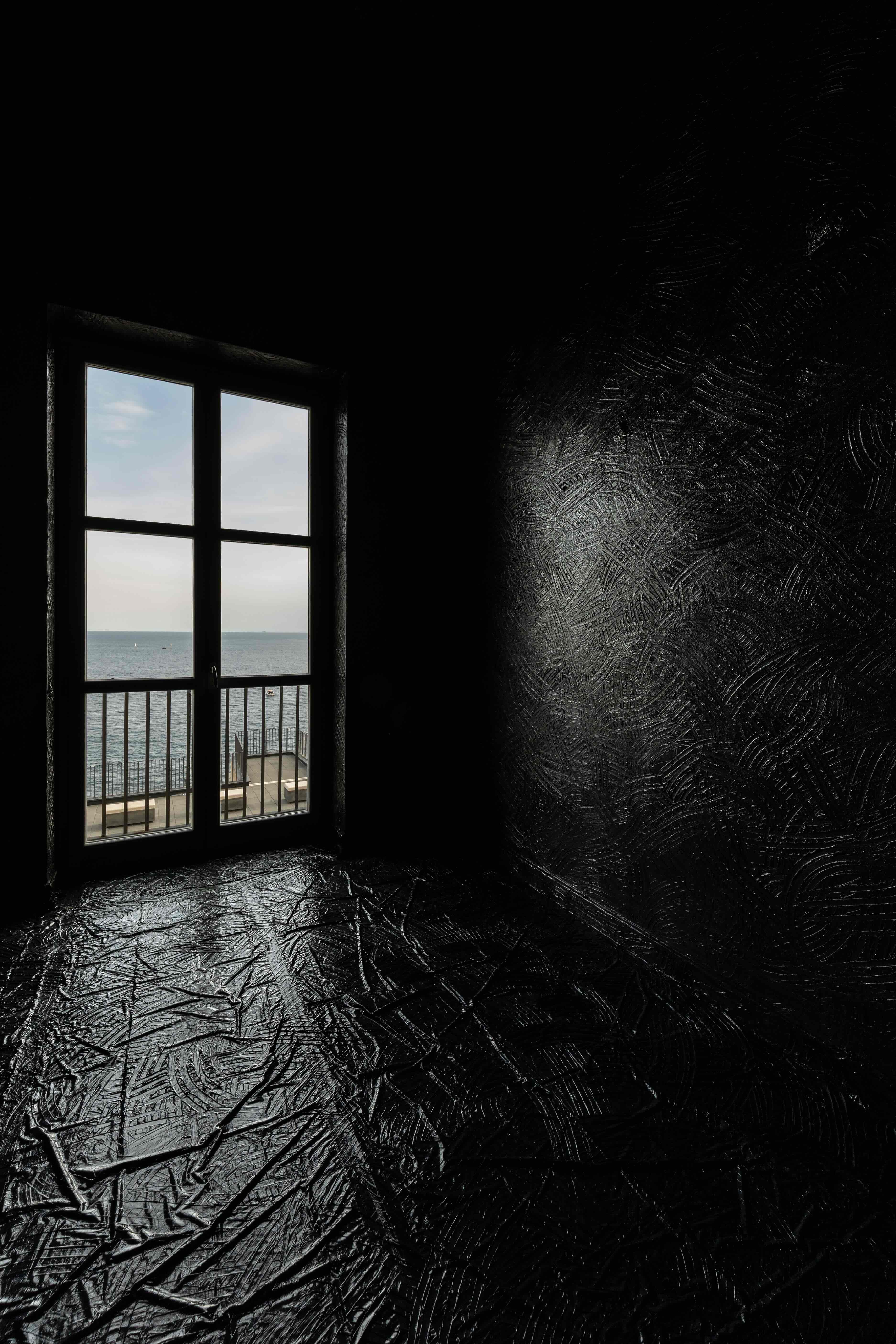
Panorama Pozzuoli was structured like an uninterrupted promenade in a layered landscape: an open-air narrative permeated by a mythological tension that takes shape in the theme of deification. This was not an abstract concept, but a geological and cultural heritage inscribed in the places themselves. In this place, where volcanoes shape the landscape and bradyseism marks the rhythm, myth became geography and the vision of the divine settled into everyday life.
It was a physical and symbolic journey through places where artists and visitors interact with historical and geological layers, ancient divinities and present-day tensions. The theme of deification was neither nostalgia nor celebration, but a contemporary question: an open question about how the human, the natural and the sacred continue to redefine themselves in the visible space.
Far from a conventional exhibition approach, Panorama Pozzuoli was configured as a collaborative programme and an open evolving ecosystem that connects aesthetic experiences, participatory practices and shared knowledge. In this virtuous intertwining, the city was not only a backdrop, but an active subject in a narrative that spans languages, generations and affiliations.
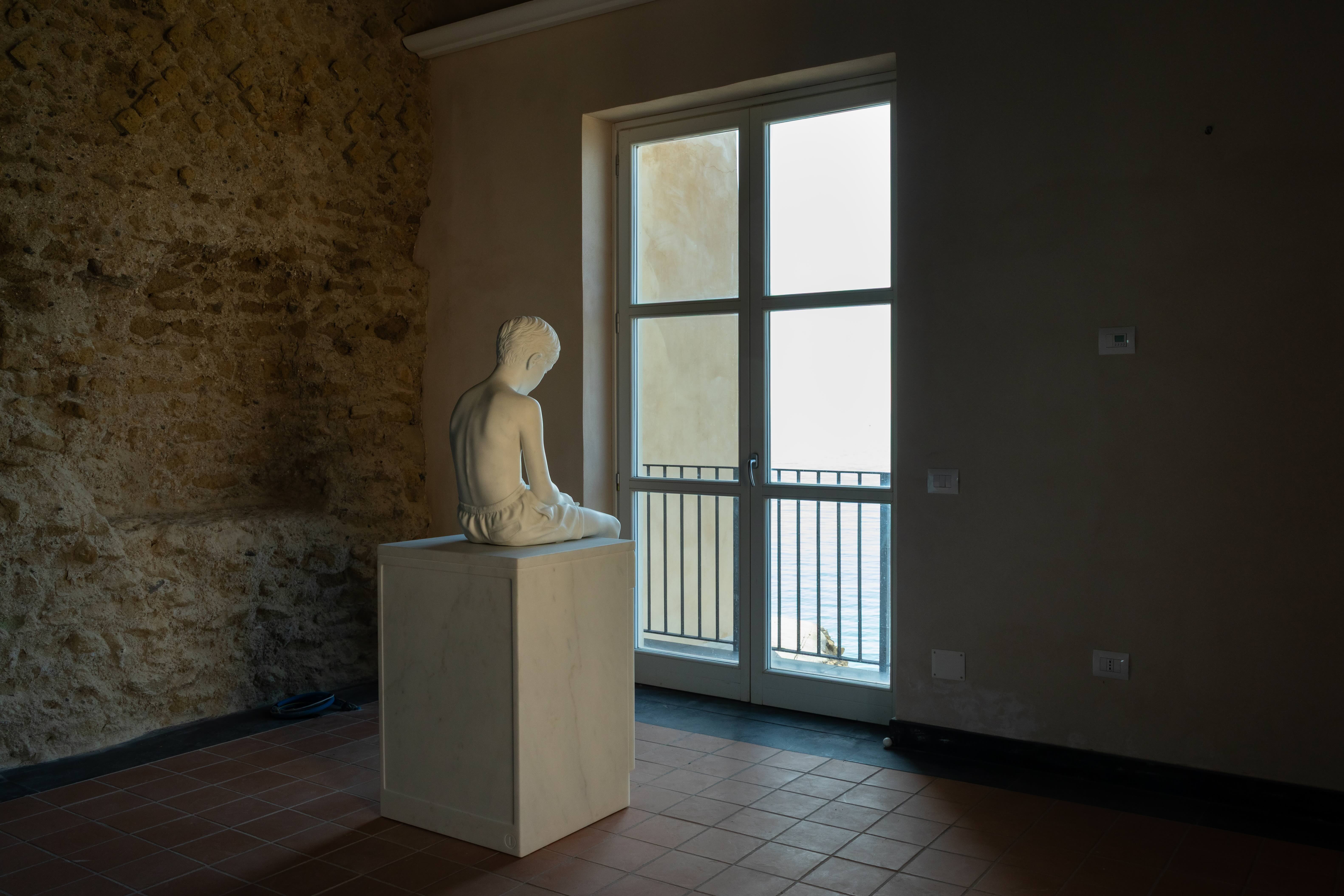
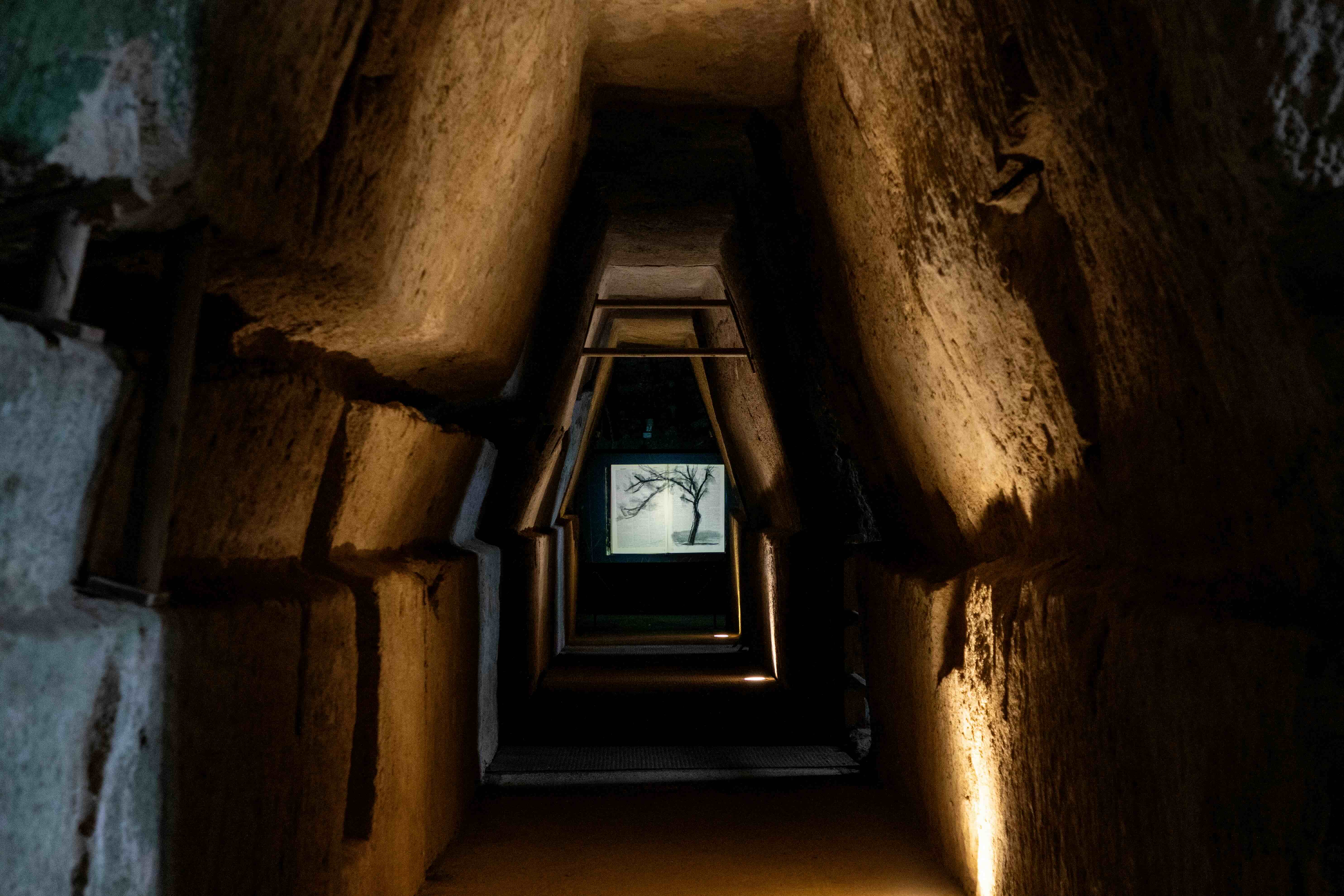
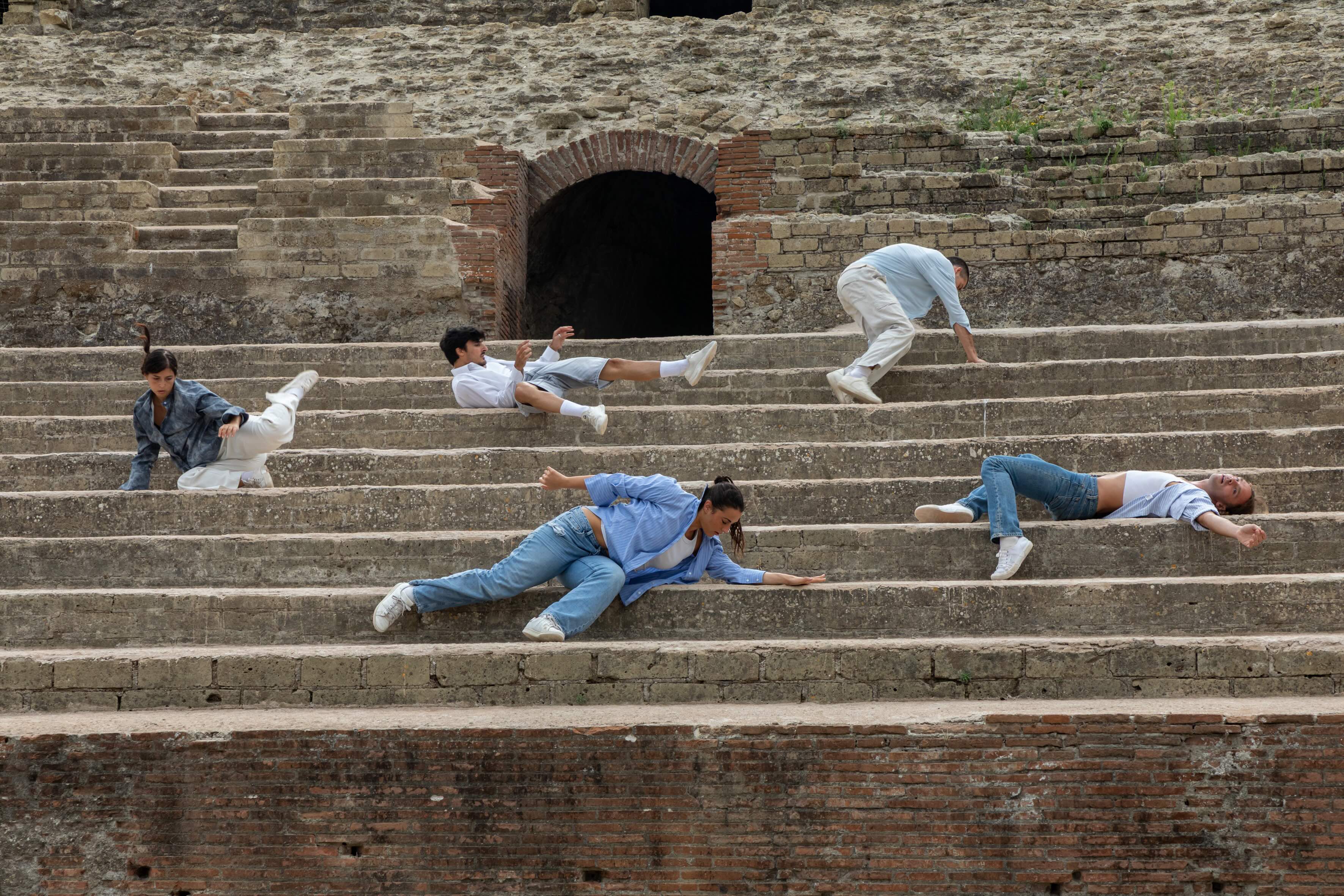
The promenade began at the Flavian Amphitheatre, one of the largest built during the Roman Empire, a monumental piece of architecture symbolising imperial glory and now a living heritage in the deepest and most romantic sense of the term. It continued with the terraced garden of the Villa Avellino Public Park and the Cinema Sofia, a symbol of urban memory named after the famous Italian actress who grew up nearby. The route continued uptown and downtown, among religious and civil spaces: the Church of San Raffaele Arcangelo with its ‘Borrominian’ architecture and the exterior of the Church of Purgatory. After this, the Rione Terra, beating heart of Panorama, where the underground archaeological trail was concentrated, the Cathedral of San Procolo Martire, built on an ancient Roman temple, the Church of San Liborio and the restored historic premises that have come back to life through the displayed works. The exhibition also included the Archaeological Park of Cumae, a city founded in the 8th century BC and considered one of the oldest colonies of Magna Graecia, that in a short time managed to conquer almost the entire coast of Campania.
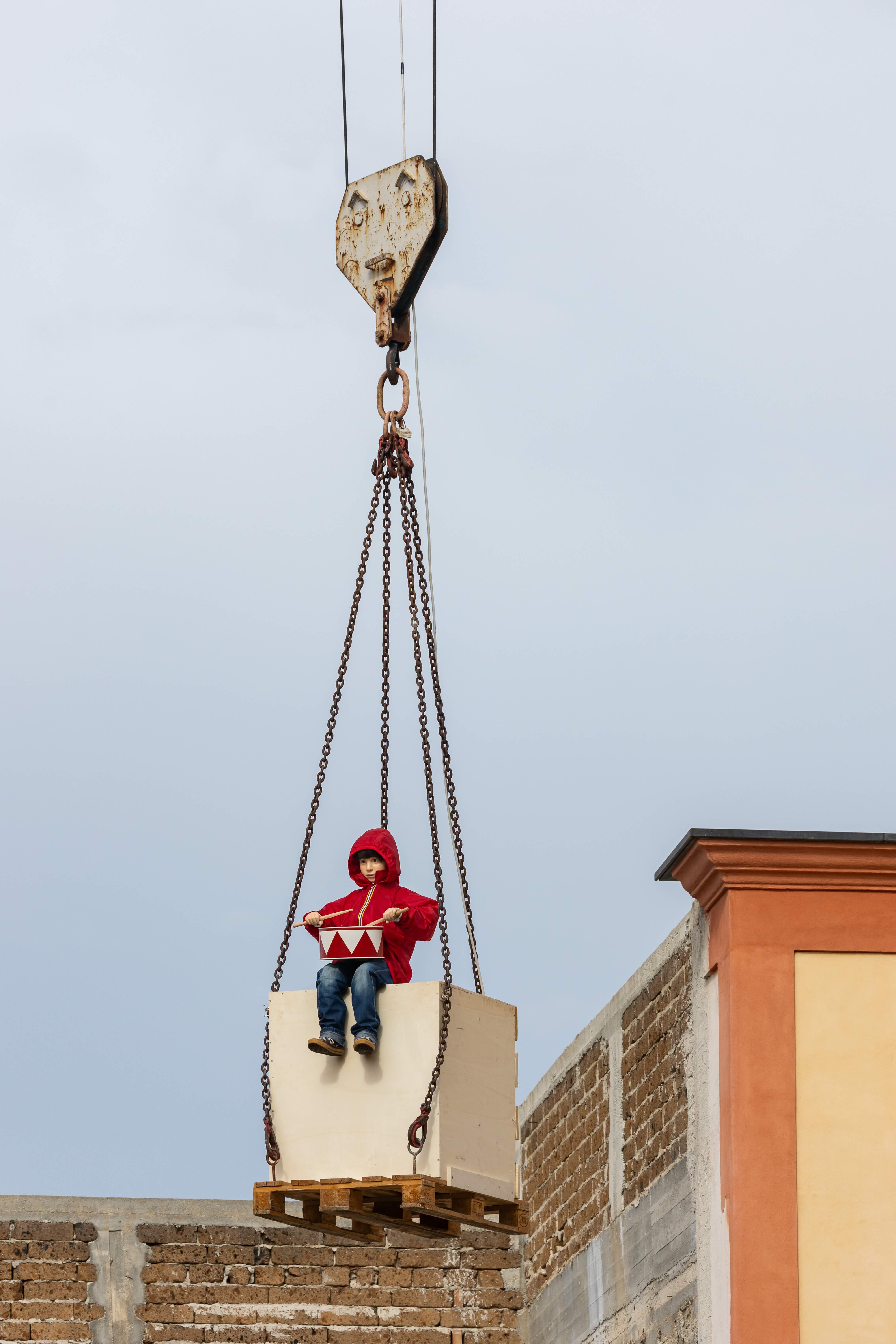
All cities have symbols. With Panorama, Pozzuoli had a new one for a while, suspended between heaven and earth. It looked up and gazed upon the sea: Maurizio Cattelan‘s Untitled, 2003 is a child beating a drum – the sound spreading through space, insistent, hypnotic, almost ritualistic. Created in 2003, the work is one of those in which the tension between innocence and obsession, typical of the artist, becomes more subtle and penetrating.
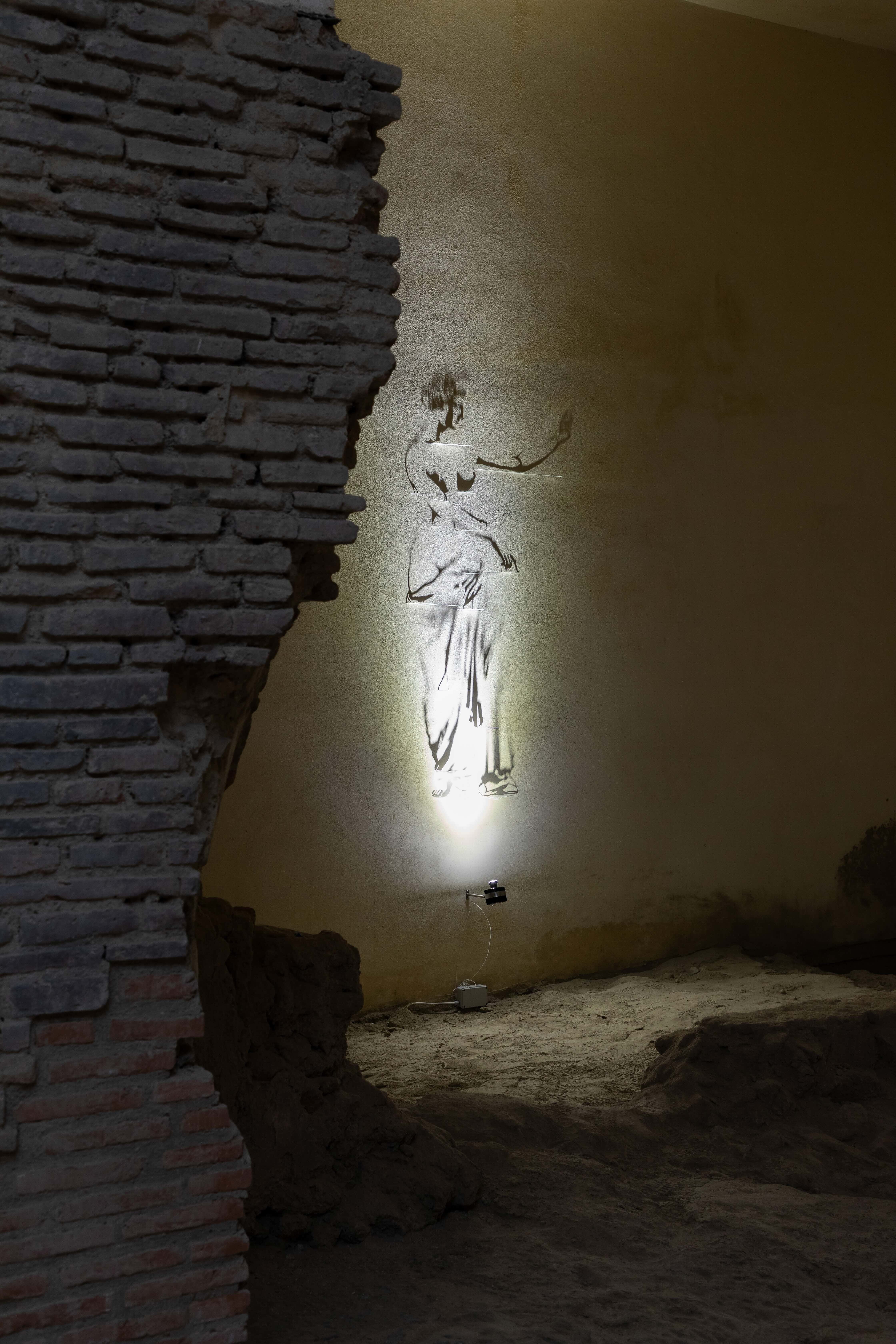
Simone Fattal presented a poignant work on the threshold between the human and the eternal; between the visible and the invisible, Anish Kapoor interrogated the gaze and the soul; Ugo Rondinone created a site-specific work linked to the voice of the ruins. And then again, just to name a few, Carlos Amorales, William Kentridge, Gino Marotta, Mario Merz, Wilfredo Prieto, Lawrence Weiner and extraordinary dialogues, such as the one between the Amphitheatre and Clarissa Baldassarri or the volcano and Goshka Macuga.
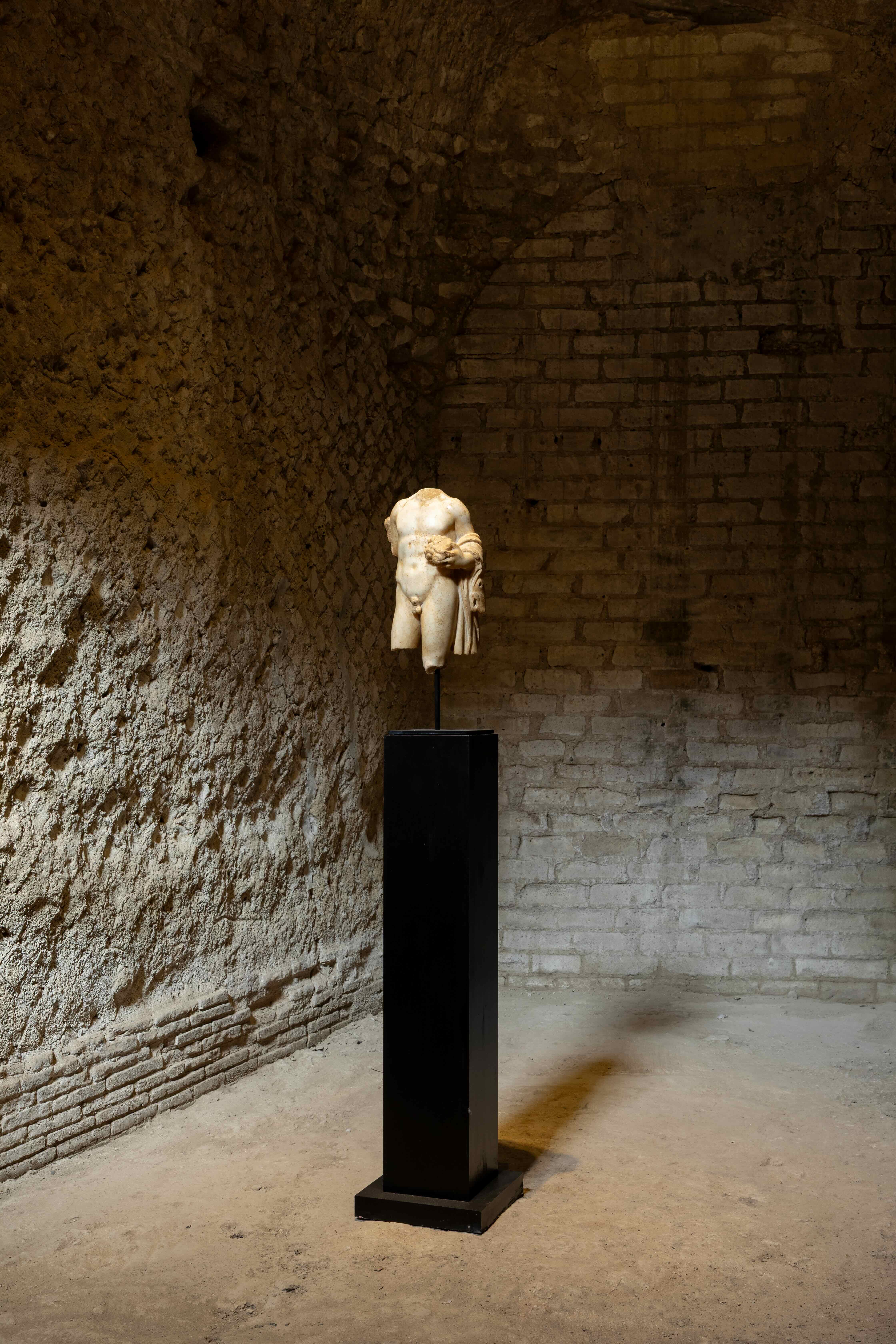
Younger generations, represented, among others, by Oliver Beer, Giusy Pirrotta, Damir Očko and Felix Shumba, also found their voice working with archaeology and myth, history and identity. Together with new productions, the exhibition offered extraordinary dialogues with masterpieces of ancient and modern art – from Roman sculptures dating back to the 2nd century CE to paintings by Luca Giordano and Luigi Primo, or the works of Matteo Bottigliero, all active between the 17th and 18th centuries – that gave strength to a path marked by almost divine presences.
From Jannis Kounellis, Emilio Isgrò, Marino Marini and Gianni Colombo, who have left their mark on Italian and international art, to the iconic projects of Elmgreen & Dragset, Simon Starling and Michael Landy, each presence built a constellation. Artists such as Sandra Vásquez de la Horra, Celia Paul, Sang A Han, Helena Hladilová, Marie Denis, Servane Mary and Rebecca Moccia brought a powerful gaze, while Simon Dybbroe Møller, David Tremlett, Fabrizio Corneli, Kevin Francis Gray and Walter Moroder amplified the power of gesture and matter. Time was layered between the dialogues with the masters of the 17th century, Viviano Codazzi and Michelangelo Cerquozzi, Giovanni Peruzzini, as well as in the poetry of Maria Grazia Rosin and the visionary cinema of Yuri Ancarani. Jan Vercruysse and Bram Demunter offered an enigmatic and political dimension, capable of opening inner rifts. Each participating artist engaged in a dialogue with their time and its inhabitants, with a clear, conscious, and at times ironic gaze, creating fertile short circuits between past and present.
Among the most eagerly awaited moments of the event, the breakfasts with the artists – organised in collaboration with the Fondazione Morra Greco, Naples – offered an informal space for dialogue between the public and the artists in the city’s bars. At the same time, the project involved schools, associations and local organisations committed to social inclusion, through activities of mediation and programmes designed to raise awareness of contemporary art, without forgetting the people involved in reintegration projects for young offenders from the juvenile detention centres in Nisida and the women’s prison in Pozzuoli, run by Puteoli Sacra.
Testifying to the importance of the initiative were also several prominent institutional figures: UNESCO Director-General Audrey Azoulay and President of the Campania Region Vincenzo De Luca visited Panorama Pozzuoli, accompanied by Lorenzo Fiaschi and Pepi Marchetti Franchi, President and Vice President of ITALICS, curator Chiara Parisi, Mayor of Pozzuoli Luigi Manzoni, Rosanna Romano, Director General for Cultural and Tourism Policies of the Campania Region, and Fabio Pagano, Director of the Campi Flegrei Archaeological Park.
The artists:
Carlos Amorales (Mexico City, 1970); Yuri Ancarani (Ravenna, 1972); Clarissa Baldassarri (Civitanova Marche, 1994); Oliver Beer (Kent, 1985); Matteo Bottigliero o Bottiglieri (attr.) (Castiglione del Genovesi, 1684 – Naples, 1757); Maurizio Cattelan (Padua, 1960); Viviano Codazzi e Michelangelo Cerquozzi (Bergamo, 1604 – Rome, 1670; Rome, 1602-1660); Gianni Colombo (Milan, 1937 – Melzo, 1993); Fabrizio Corneli (Florence, 1958); Louis Cousin, known as Luigi Primo Gentile (Bruxelles or Breynelden, Belgium, 1606 – Rome, Italy, 1667/1668); Bram Demunter (Kortrijk, 1993); Marie Denis (Bourg-Saint-Andéol, 1972); Simon Dybbroe Møller (Aarhus, 1976); Elmgreen & Dragset (Michael Elmgreen, Copenhagen, 1961; Ingar Dragset, Trondheim, 1969); Simone Fattal (Damascus, 1942); Luca Giordano (Naples, 1634-1705); Kevin Francis Gray (Armagh, 1972); Sang A Han (Seoul, 1987); Helena Hladilová (Kroměříž, 1983); Emilio Isgrò (Barcellona Pozzo di Gotto, 1937); Anish Kapoor (Mumbai, 1954); William Kentridge (Johannesburg, 1955); Jannis Kounellis (Piraeus, 1936 – Rome, 2017); Michael Landy (London, 1963); Goshka Macuga (Warsaw, 1967); Marino Marini (Pistoia, 1901 – Viareggio, 1980); Gino Marotta (Campobasso, 1935 – Rome, 2012); Servane Mary (Dijon, 1972); Mario Merz (Milan, 1925 – Turin, 2003); Rebecca Moccia (Naples, 1992); Walter Moroder (Val Gardena, 1963); Damir Očko (Zagreb, 1977); Celia Paul (Thiruvananthapuram, 1959); Giovanni Peruzzini (Ancona, 1629 – Milan, 1694); Giusy Pirrotta (Reggio Calabria, 1982); Wilfredo Prieto (Sancti Spíritus, 1978); Ugo Rondinone (Brunnen, 1962); Maria Grazia Rosin (Cortina d’Ampezzo, 1958); Sculptor of the 2nd century CE; Felix Shumba (Bulawayo, 1989); Simon Starling (Epsom, 1967); David Tremlett (Dartford, 1945); Sandra Vásquez de la Horra (Viña del Mar, 1967); Jan Vercruysse (Ostenda, 1948 – Bruges, 2018); Lawrence Weiner (New York, 1942-2021).
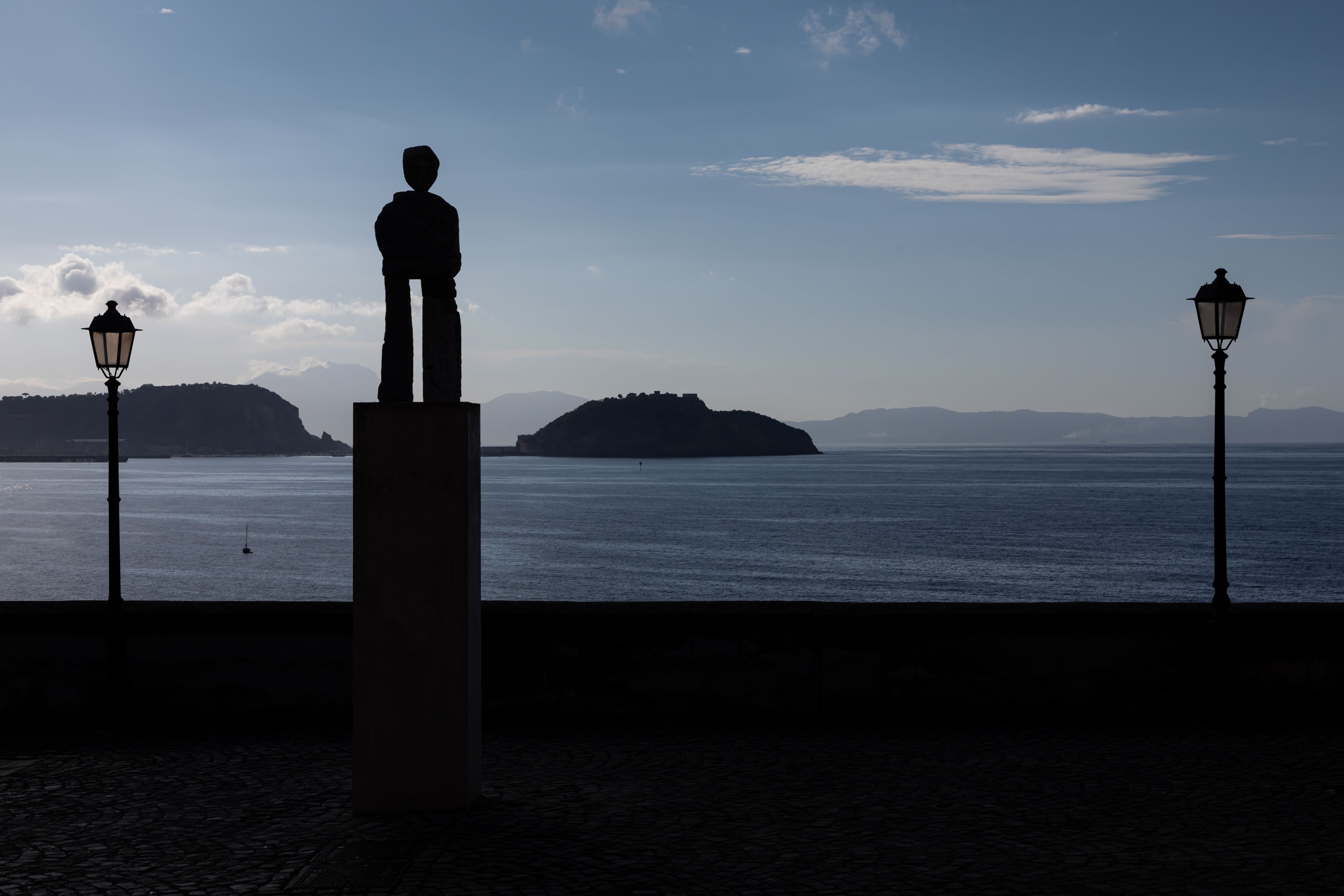
Photography: Danilo Donzelli and Mauro Palumbo
Participating galleries:
A arte Invernizzi, Apalazzogallery, Alfonso Artiaco, Botticelli Antichità, Galleria Canesso, Car Gallery, Cardi Gallery, Carlo Orsi, Galleria Continua, Thomas Dane Gallery, Galleria Umberto Di Marino, Galleria Tiziana Di Caro, Galleria Doris Ghetta, Galleria d’Arte Frediano Farsetti, Galleria Fonti, Galleria Fumagalli, Gagosian, Giacometti Old Master Paintings, Gian Marco Casini Gallery, Kaufmann Repetto, Galleria Lia Rumma, Lunetta11, Magazzino, Massimo De Carlo, Mazzoleni London-Torino, Francesca Minini, Galleria Massimo Minini, ML Fine Art, Galleria Franco Noero, Galleria Alberta Pane, Giorgio Persano, Porcini, Richard Saltoun Gallery, Robilant+Voena, Thaddaeus Ropac, Secci, SpazioA, Studio Trisorio, Tim Van Laere Gallery, Caterina Tognon Arte Contemporanea, Tornabuoni Arte, Tucci Russo Studio per l’Arte Contemporanea, Victoria Miro Venice, Vistamare, Zero…

Panorama Pozzuoli
Downloads
Take a look at Panorama Pozzuoli‘s Exhibition Guide
Download Panorama Pozzuoli‘s Map with the exhibition venues
Check out the Agenda for Panorama Pozzuoli
Explore Arcipelago Panorama, places of culture and landscape, exhibitions and events beyond Panorama Pozzuoli
Leaf through the Diary of Panorama Pozzuoli
PANORAMA POZZUOLI
10-14.09. 2025
A project by ITALICS
Curated by Chiara Parisi
Curatorial Coordination: Veronica Botta
General Coordination: ArtsFor_
Strategic Advisory: ArtsFor_, Camilla Invernizzi
Production Assistants: Sonia Belfiore, Marco Lauro
Graphic Design: Giga Design Studio
Digital Editor: Victoria Weston
VIP Relations: Flavia Lo Chiatto
Press Office: Lara Facco P&C
Social Media: Roberto Bianchi
Photography: Luciano Romano
Photo Reportage: Danilo Donzelli
Video: Palma Production
With the collaboration and support of: Regione Campania and Scabec, funded via Italy’s Cohesion Funds 21/27
Under the patronage of: UNESCO, Ministero della cultura, City of Pozzuoli
Main partner: Banca Ifis
Sponsors: Jumeirah Capri Palace, Valmont
Venue sponsors: Poste Italiane
Technical sponsors: Forma Edizioni, NM3
Media partner: Il Giornale dell’Arte
For information info@italics.art
In collaboration with: Fondazione Donnaregina per le Arti Contemporanee – museo Madre, Fondazione Morra Greco, Napoli, Museo e Real Bosco di Capodimonte, Archeologico dei Campi Flegrei, Puteoli Sacra
With the special participation of: Aporema, Dispaccio

Follow us
Stay updated on Panorama Pozzuoli with the ITALICS newsletter
Follow on Instagram @italics.art and the hashtag #PanoramaPozzuoli