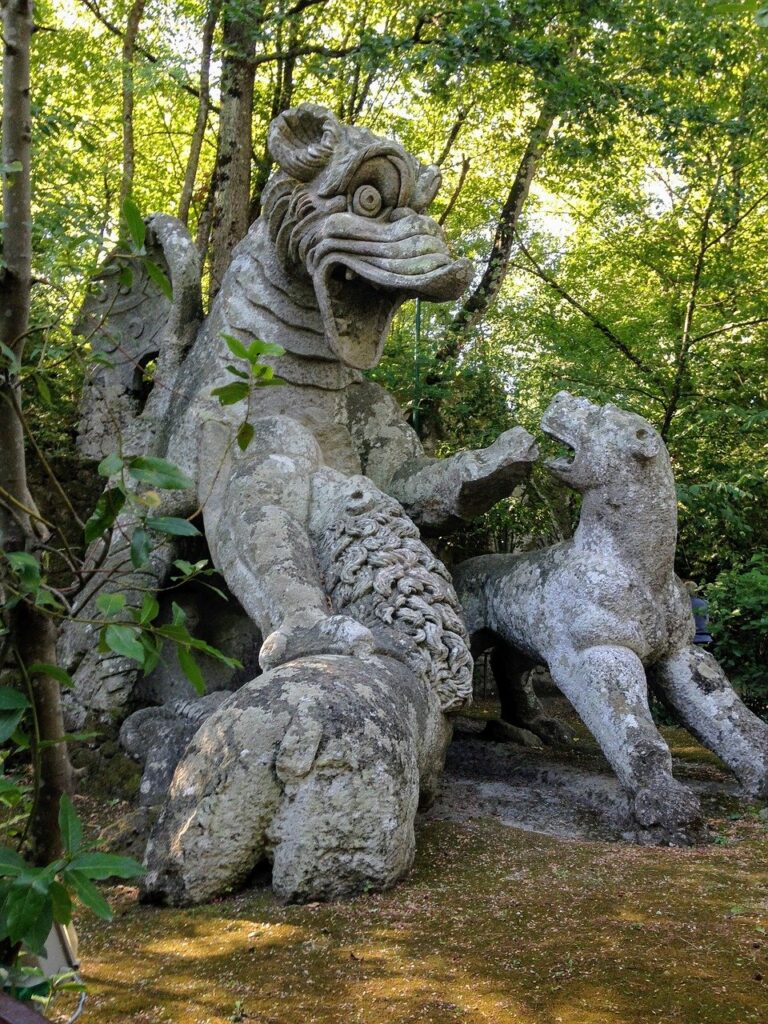
To the North of Rome, there are many delights hidden in the forests and hills of the Lazio region. There is the small town of Viterbo with its thermae and churches, and there is also Villa Caprarola with its vast gardens built by the Farnese family. Yet, there is a place that is different from anything you might see – Sacro Bosco or Sacred Groove. Begun in the sixteenth century, Sacro Bosco is a rare example of the post-High Renaissance interest in the grotesque and extravagant. The mannerist complex steps away from the perfect symmetry and logic of the Renaissance and instead creates a chaotic narrative full of magic.
Sacro Bosco was built on the Orsini grounds in a valley close to their castle. The project was commissioned by Pier Francesco Orsini who was known by his nickname Vicino. As gardens were big part of the aristocratic estates, they were designed for the owner and the peer-group to enjoy and use for various activities. Hence, it was a serious matter for a nobleman to provide oneself with a proper setting. Orsini commissioned Pirro Ligorio, a famous architect who was also responsible for the Villa d’Este, to work on the design of the grounds, and Sacro Bosco’s grandiose statuary instead is attributed to Simone Moschino, a renowned sculptor who mostly worked in Tuscany.
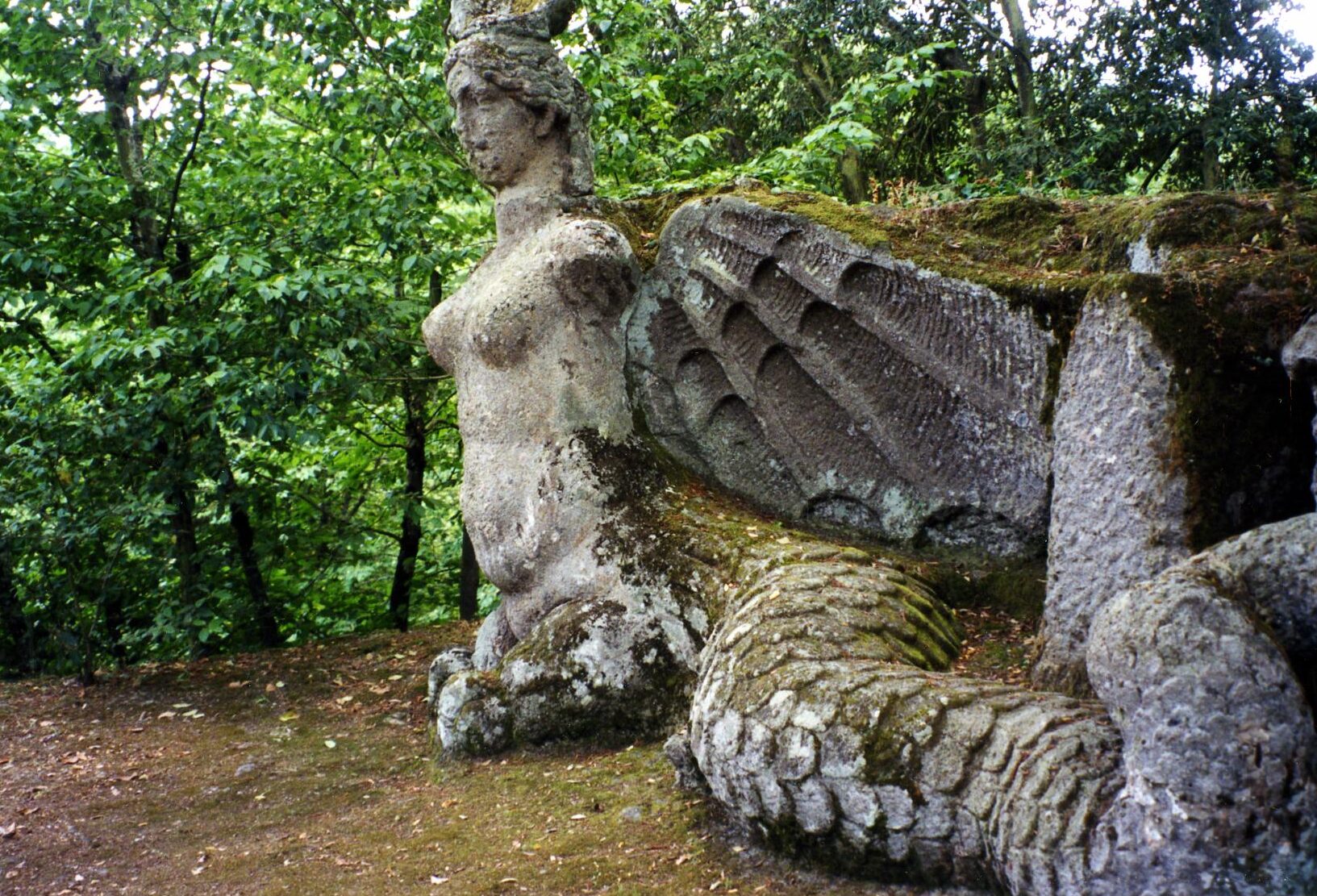
The Sacro Bosco’s spatial organization and mystical statuary are often considered to be disorderly which makes the park so unique. Yet, such a choice might have been a friendly competition with the neighboring Villa Caprarola of the Farnese family. The Caprarola was a great example of the grand and organized décor of the period; the fountain gardens of the Farnese are famous for their symmetry as well as the villa. Vicino Orsini himself was related to the Farnese through his wife Giulia Farnese (who should not be mistaken with her eponymous grandaunt, the mistress of Pope Alexander VI). Vicino loved Giulia dearly and after her death he decided to build the Sacred Groove as a getaway from his sorrow.
The statuary instead takes the breath away by its oddness. Hannibal’s elephant, monsters and mythological characters take over the vegetation; there is mighty Cerberus as well as Ceres and Aphrodite, there is Proteus who carries the emblem of the Orsini on his weapons. The bizarre décor brings together the fantastic as well as showing Orsini as a man with a sense of humor. The most particular of the settings is the hellmouth covered triclinium; the entrance is as grotesque as it can be – one had to enter the mouth of the mask-like Orcus, an underworld Roman and Etruscan god. Upon entering in the mouth that misses its body, the visitor was invited to dine at the table with Vicino and others, in hell.
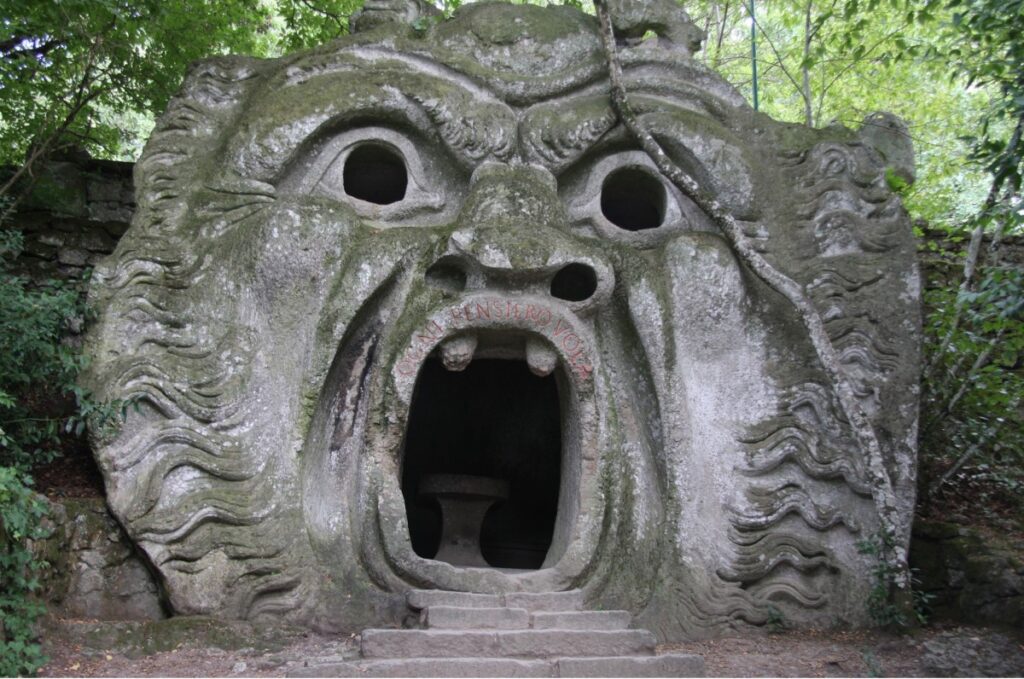
During the nineteenth and twentieth century the park was forgotten and abandoned, but after Salvador Dalì featured the park in a short film in 1940’s, it regained its life once again. Now Sacro Bosco is a great destination if you are in Rome. It is also a great tribute to Giulia Farnese whose widower had to dine in hellmouth to deal with his grief.


