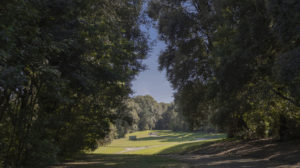
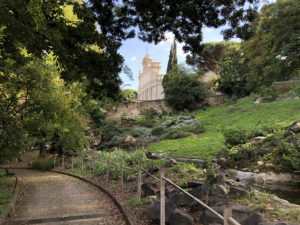
In 1973, Harry and Antonia Salamon bought and restored the medieval castle of Sant’Alessio con Vialone, located a short drive from Milan, marking the start of a singular wildlife conservation project. They were inspired by the work of Cornell University, which had succeeded in repopulating areas with extinct species by raising a few native species in captivity.
The Salamons planted and dug small lakes, bringing back the area’s original vegetation with little investment and lots of expertise. Over the years, dozens of species of wading birds – the black-winged stilt, herons, including the night heron, and the glossy ibid – were brought to Sant’Alessio, thanks to which the region once again became their home.

The project’s most concrete success was the reintroduction of the white stork throughout the Po Valley: since the 1970s, the Oasi has released more than 1,000 storks, repopulating northern Italy. The method has been taken as a model by numerous international zoological and nature organisations and is being used again by Giulio Salamon, the Oasi keeper, for the spoonbill, a flat-billed wading bird with the elegance of a heron.
The Oasi opened to the public in 1994 and expanded to include a section devoted to butterflies and hummingbirds, opening the biggest aviary in Italy for these wondrous creatures in 2020. In the meantime, it developed a project with Stefano Rimoli aimed to protect many of the 320 hummingbird species that live between Alaska and the Tierra del Fuego archipelago.
Poetic and a place of extraordinary beauty, the Oasi di Sant’Alessio is one of a kind.