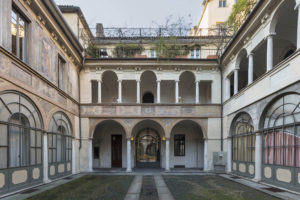
There are three unusual science museums in Turin, housed in 19th-century buildings not far from one another, filled with finds and artefacts displayed in old wooden vitrines and together offering visitors a trip through the history of museums.
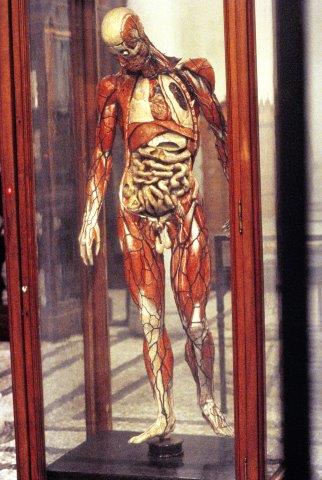
The Museum of Human Anatomy is packed with collections of medical material, including foetus skeletons in glass jars, period instruments and fine wax models of organs and bodies used for teaching purposes in the 18th century.
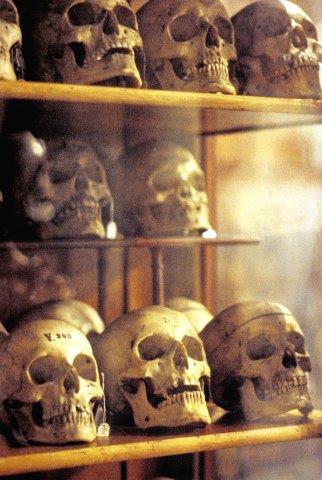
Cesare Lombroso, a well-known anthropologist and criminologist, spent the latter part of his life as a medical examiner at the Turin jail, where he developed his controversial and anachronistic anthropological theories about criminals, even dissecting the cadavers of the inmates. In 1876, he founded the Museum of Criminal Anthropology, filling it with skulls and skeletons, physical evidence and the work of bandits and convicts, an Art Brut corner of the city. For years, the “No Lombroso” committee, supported by numerous associations and town councils, fought for the closure of this museum.
Both museums now belong to the University of Turin.
But the most unusual of the three might be the Fruit Museum, with a collection of more than 1000 pieces of artificial fruit (mostly apples), vegetables and mushrooms, made by the agronomist Francesco Garnier Valletti in the 19th century and identical to real ones in shape, colour and even weight.
I visited these museums in 2014 with the American artist Daniel Faust, the archive of whom is filled with thousands of photographs taken in museums all over the world, from the most famous to the least known. And so, in spite of a few difficulties (taking photographs was not allowed), these museums also became part of his incredible and obsessive collection of collections.